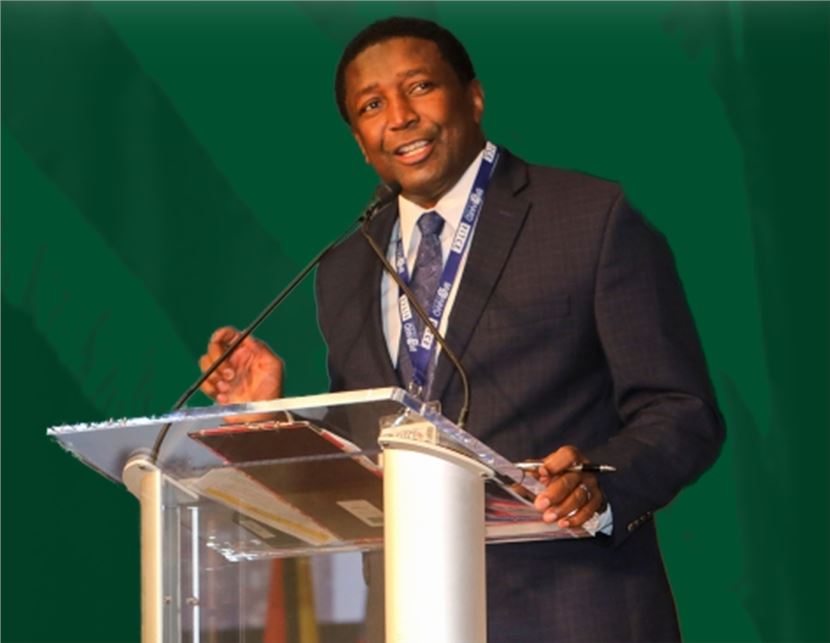
Florida’s 20th District Is Becoming a Test of Power, Representation, and Political Memory
Florida’s 20th Congressional District is no longer just another Democratic primary. It has become a compressed battle over representation, institutional power, local memory, and the future of Black political leadership in South Florida. The resignation of Sheila Cherfilus-McCormick created a vacancy in one of Florida’s most Democratic congressional seats. But the political vacuum did not remain empty for long. Into the race stepped a familiar cast of South Florida figures: former Broward County Mayor Dale V.C. Holness, activist Elijah Manley, Luther “Uncle Luke” Campbell, and, most controversially, longtime Congresswoman Debbie Wasserman Schultz, whose own district was reshaped by redistricting. That last development changed the entire meaning of the contest.
For Wasserman Schultz, the race is about survival, seniority, and continuity. For many local Black leaders, it is about whether a historically Black political seat will remain anchored in the community it was designed to empower. For Holness, the race may be the final opportunity to convert decades of local leadership into federal power. Holness is not entering this race as a novelty candidate. He is a former Broward County mayor, former county commissioner, business owner, and long-standing political figure with deep roots in the district’s civic architecture. He also carries one of the most dramatic political memories in recent Florida history: the 2021 Democratic primary for this same congressional seat, when he lost to Cherfilus-McCormick by only five votes.
Five votes is not a loss. It is an unfinished sentence.
That history gives Holness a powerful argument: he has already demonstrated that he can reach the threshold of victory in this district. The question now is whether he can become the consensus candidate before the anti-Wasserman Schultz vote divides among multiple Black candidates. That is the central strategic issue of the race. Wasserman Schultz enters with national name recognition, congressional seniority, fundraising capacity, and a long record of constituent service in Broward. She will argue effectiveness. She will argue experience. She will argue that in Washington, relationships matter. But this race is not happening in a political vacuum. It is happening after redistricting, after scandal, after a vacancy, and after years of national debate about whether minority communities are losing political power through technical changes that appear administrative but produce major electoral consequences.
That is why House Democratic Leader Hakeem Jeffries’ hesitation to endorse Wasserman Schultz is so important. In normal circumstances, party leaders protect incumbents. The fact that this case has produced visible hesitation shows that the race is being viewed not only through the lens of party loyalty, but through the deeper lens of representation. Holness’ opportunity is therefore clear.
He must make the race bigger than himself, but not smaller than the district. He cannot simply run as “the former mayor.” He must run as the builder of a South Florida prosperity coalition: Black voters, Caribbean communities, small business owners, educators, homeowners, immigrants, young families, and civic leaders who want a representative with local roots and federal ambition. His campaign slogan, “Prosperity for All,” is more than a line if he uses it correctly. It can become the organizing framework for a district that needs housing, job training, healthcare access, education investment, immigration intelligence, small business growth, and a stronger voice in Washington. The strongest Holness message is not grievance. It is restoration.
Restore representation. Restore trust. Restore economic ambition. Restore the district’s voice after scandal and vacancy. Restore the unfinished mandate from the five-vote race. The risk for Holness is fragmentation. Elijah Manley brings youth, activism, and a generational contrast. Luther Campbell brings cultural fame and media attention. Wasserman Schultz benefits if the field remains divided. If three or four candidates compete for the same emotional and demographic lane, she does not need majority enthusiasm. She only needs a plurality. That is why the next phase of the race will likely be less about speeches and more about consolidation. Endorsements, withdrawals, civic meetings, local clergy, mayors, commissioners, labor voices, Caribbean-American networks, and Democratic clubs may determine whether Holness becomes the practical alternative or simply one of several anti-establishment options. Holness’ path to victory requires discipline.
First, he must become the adult in the room: experienced, calm, local, and ready to govern. Second, he must frame Wasserman Schultz respectfully but firmly as a representative of another political map, not this district’s natural future. Third, he must avoid being trapped in a purely racial argument. Representation matters, but the winning message must connect representation to results: housing, safety, schools, healthcare, jobs, immigration, and opportunity. Fourth, he must activate the Caribbean and African diaspora vote with seriousness, not symbolism. This district is not generic South Florida. It is a complex civic territory shaped by Jamaican, Haitian, African-American, Hispanic, and immigrant communities with different histories but overlapping economic concerns. Fifth, he must raise enough money quickly to show viability. In a compressed race, money is not everything, but visible momentum is.
There is also an under-discussed dimension: culture.
Politics is not only policy. It is memory, identity, recognition, and dignity. A district chooses not only who votes in Congress, but who tells its story. That is where Holness has an advantage if he understands it. His campaign can become a cultural campaign for local dignity: Broward not as a fallback district for displaced power, but as a community with its own leaders, institutions, and voice. This is why the race matters beyond Florida. Across America, political representation is being reshaped by redistricting, demographic change, scandal, incumbency pressure, and party calculation. FL-20 is a local race, but it reflects a national question: when political maps change, who gets protected, and who gets displaced?
Holness can win. But he cannot win by nostalgia alone. He must turn the memory of five votes into a movement of fifty thousand voters. He must become the consensus vehicle for voters who believe the district needs both representation and competence. He must offer not only a critique of the moment, but a governing vision for the next decade. The race is still fluid. The field is still forming. But one thing is already clear: Florida’s 20th District is not merely choosing a member of Congress. It is deciding who has the right to inherit a political legacy — and who has the strength to renew it.

Roberto Masiero
